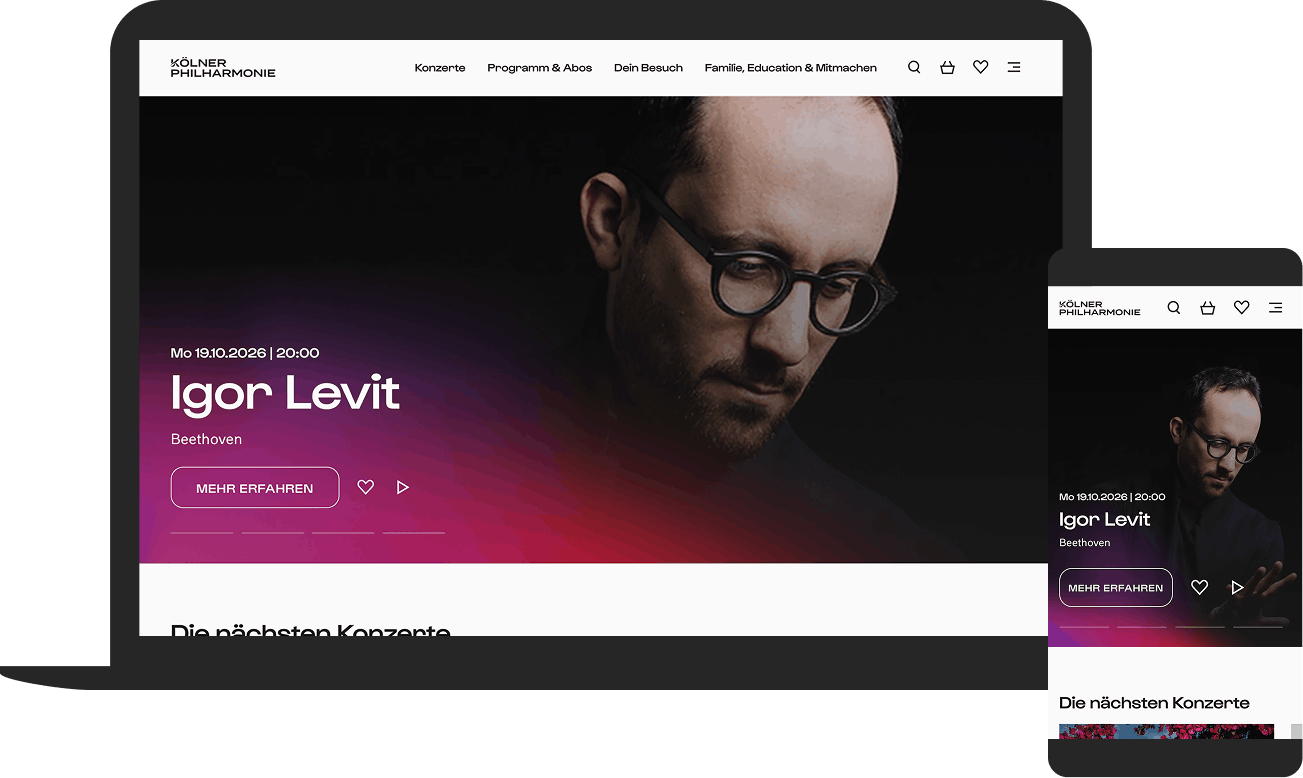
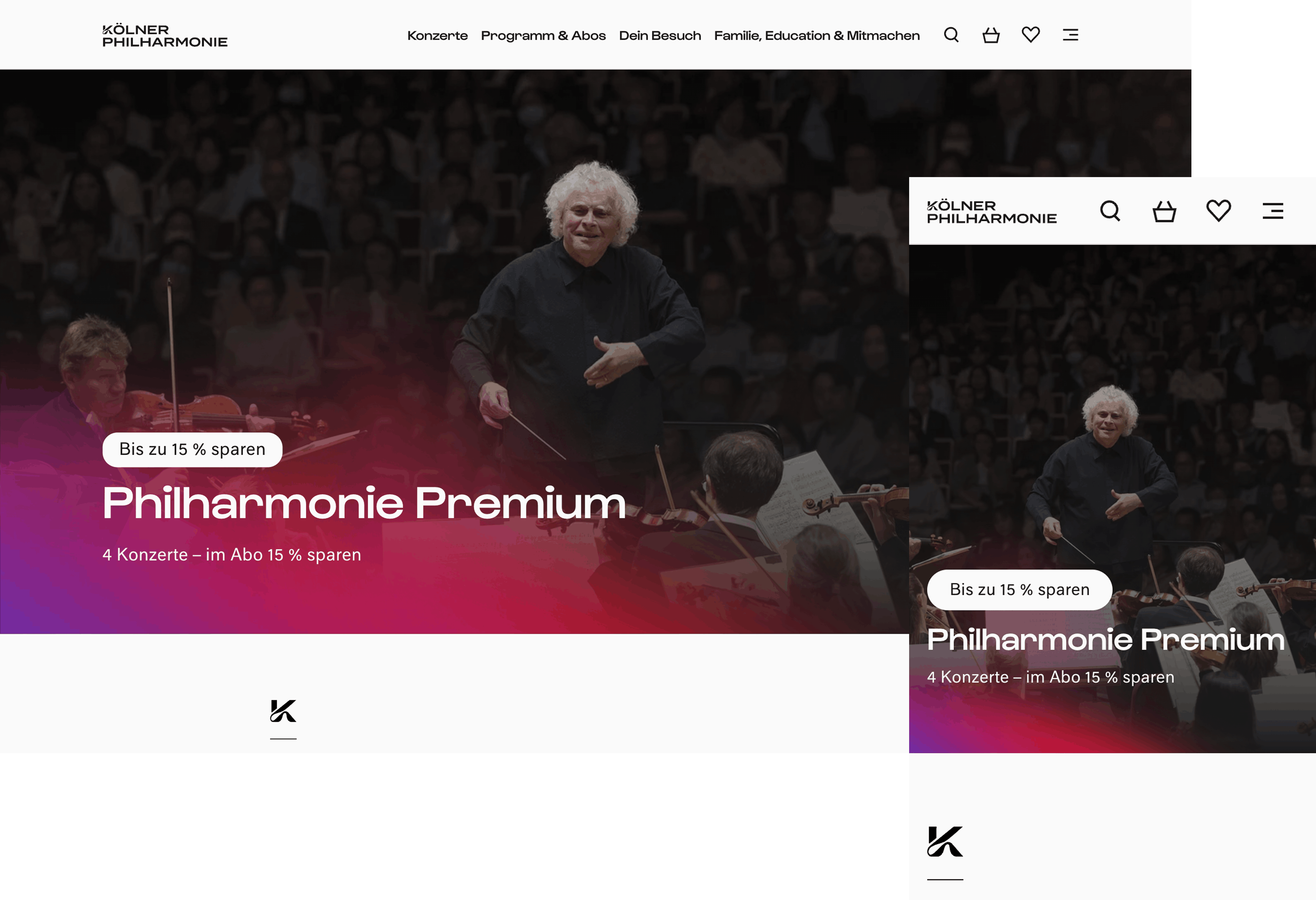
Back in 2017, for many people, a ‘website’ simply meant having a quick look, checking dates and times, and that was it. Today, over 80% of ticket purchases at the Cologne Philharmonic are made via smartphone. People are often on the move, between appointments, with little time to spare. That is precisely what we focused on for the relaunch. The new site needed to be fast and clear, whilst still inspiring visitors to explore the programme. Technically, the front-end of the site is built using a modern Nuxt headless architecture, whilst the rapid-development framework Django powers the back-end. For the Philharmonie, this translates into daily efficiency in content management, flexibility in page design, and the ability to schedule content publication for campaigns or programme highlights.
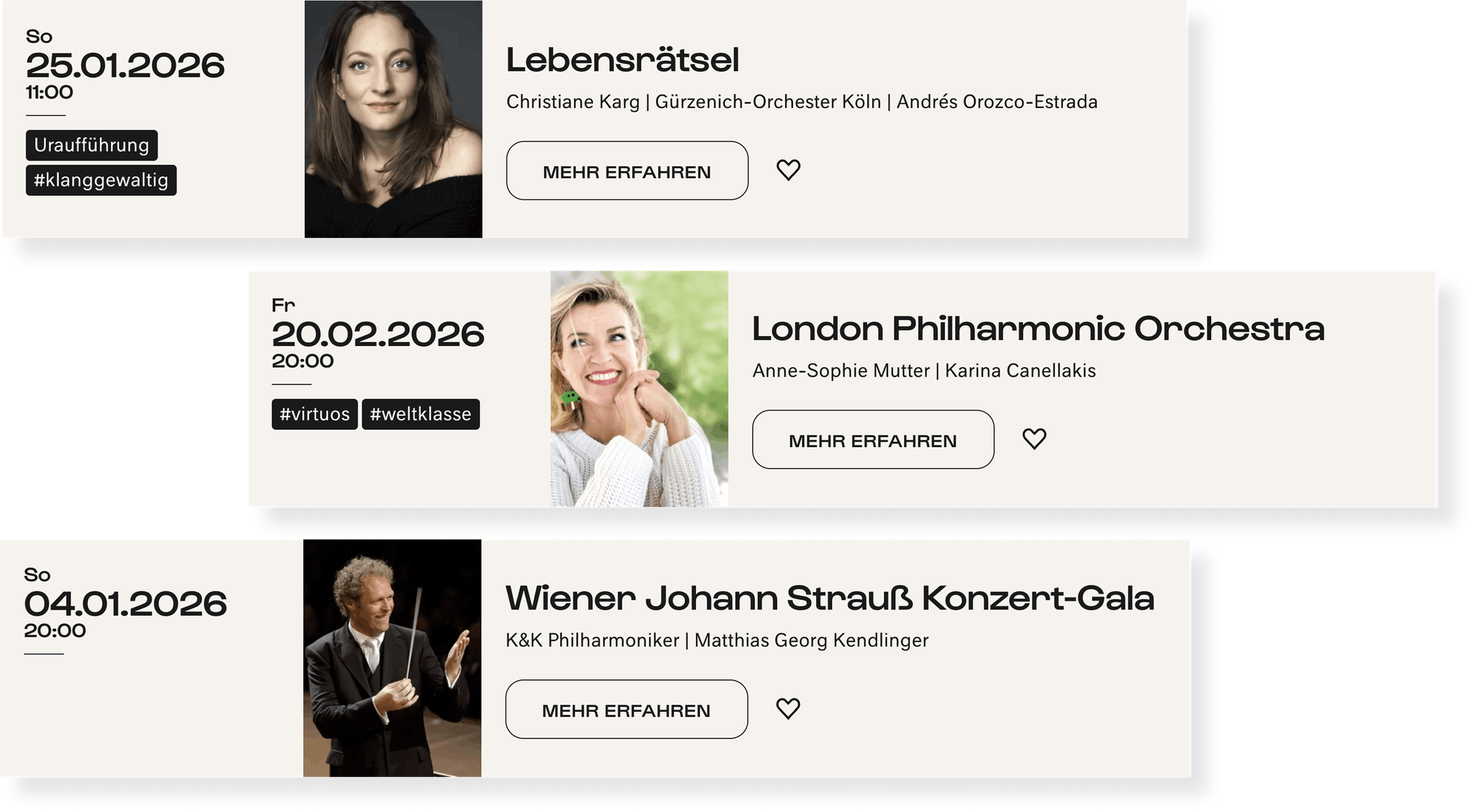
(Hash)tags that open doors
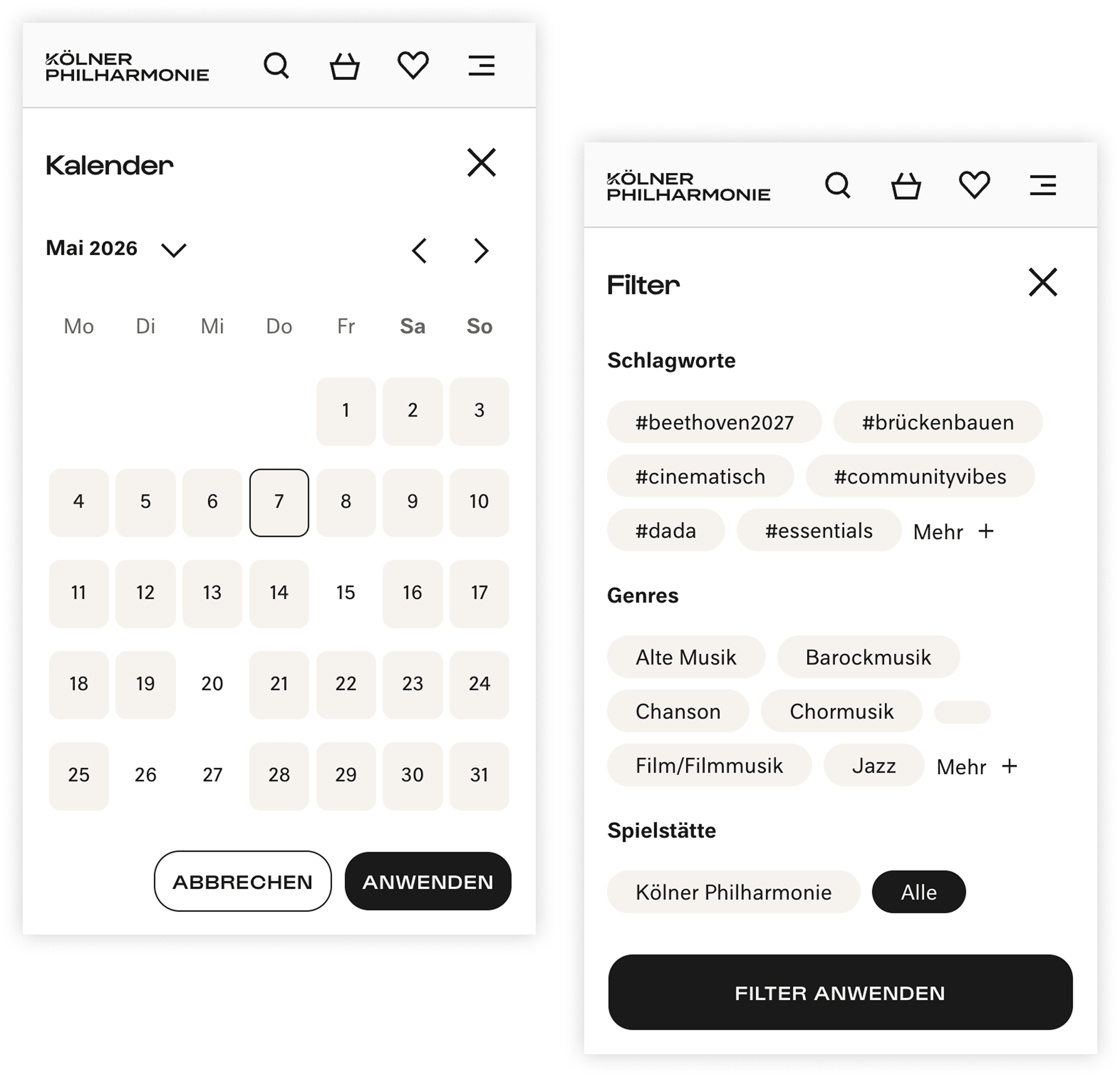
The Cologne Philharmonic’s programme is multifaceted and extensive. So we started where everything comes together: the events list. It’s designed to give you a quick overview so you can then narrow down your search effectively. Not through complicated filter options, but through features that really help you find your way: genres, hashtags and keywords.
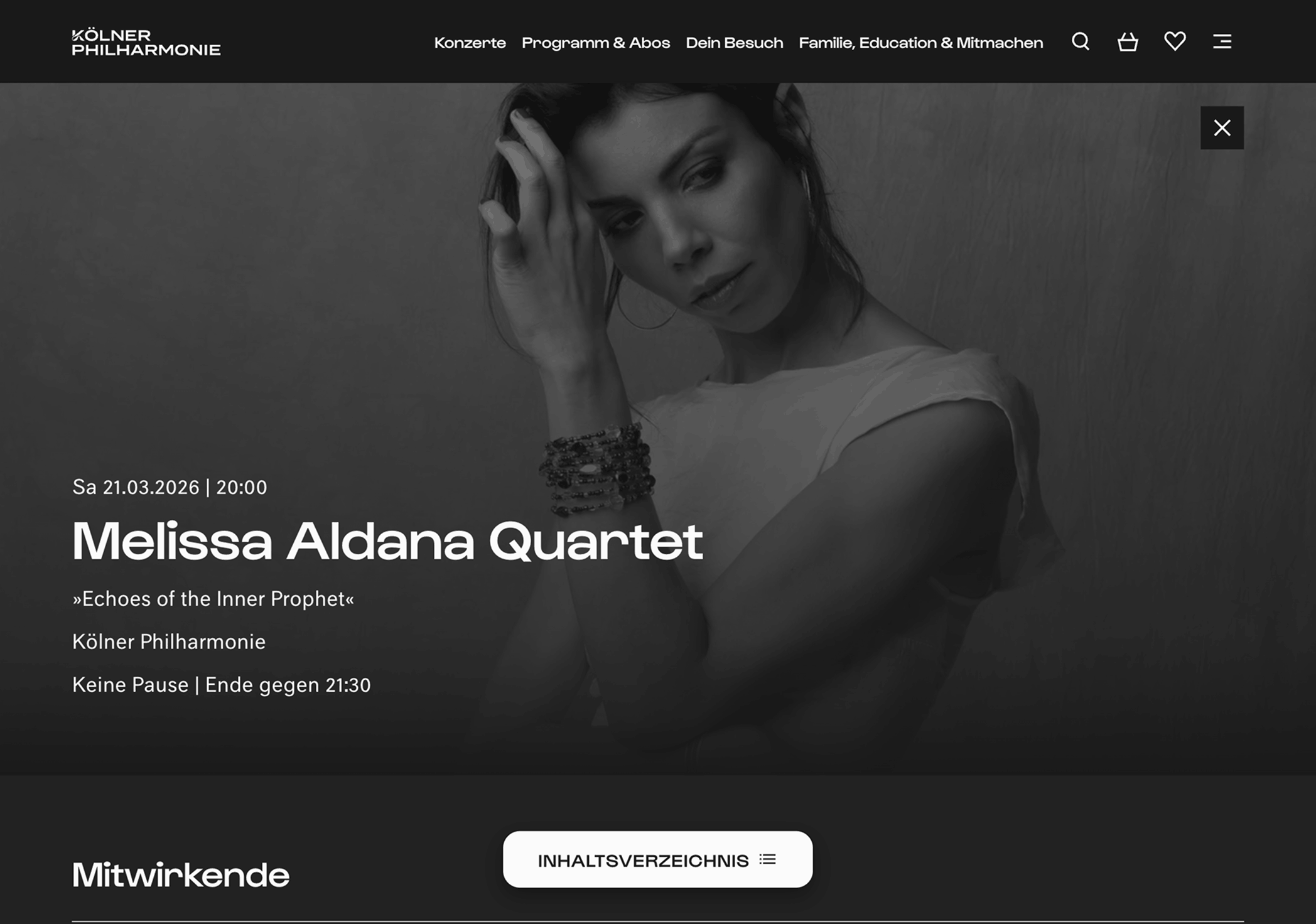
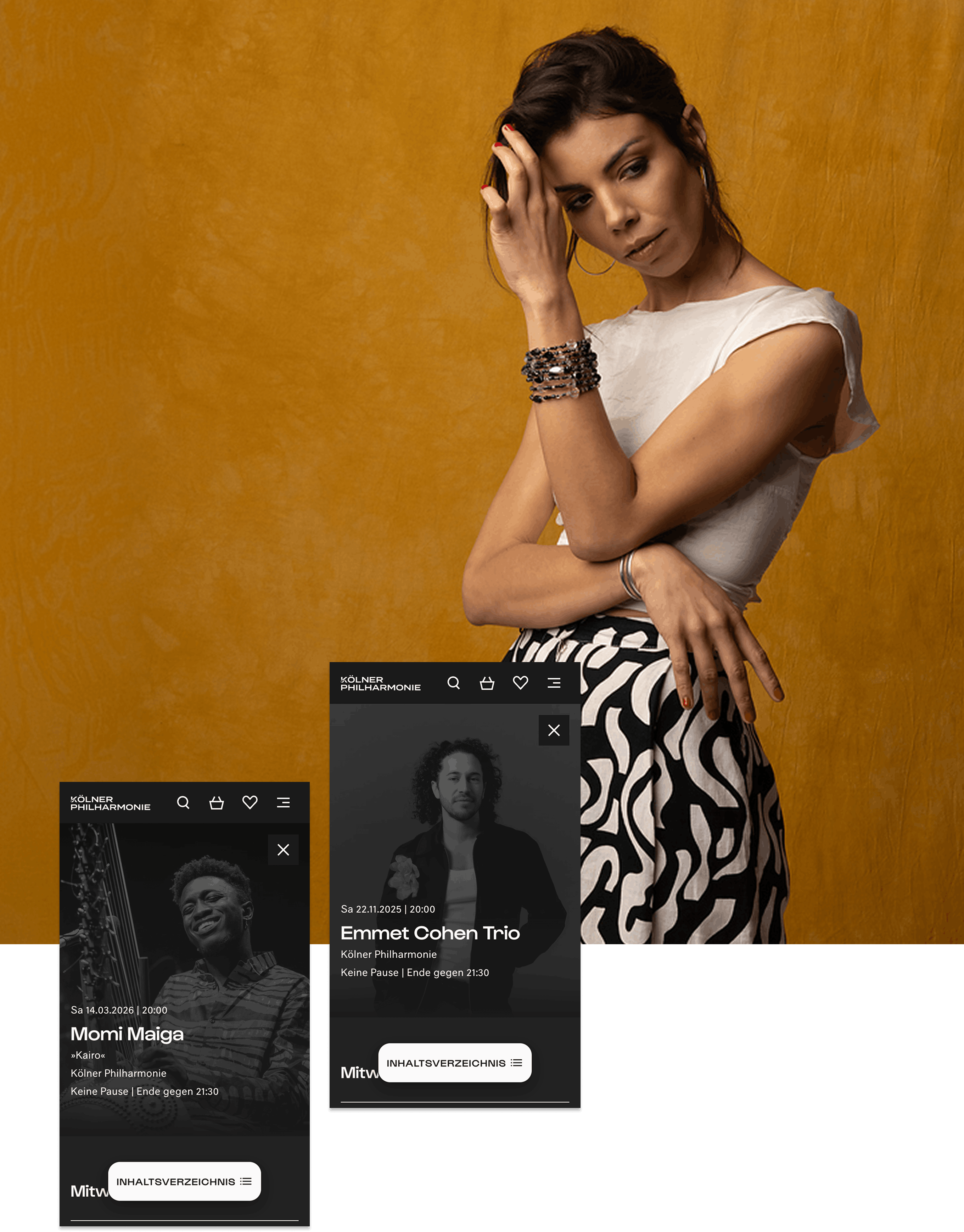
“U29 Tip”, “Family”, “#moodbooster” or “Free Admission” are deliberately accessible signposts that highlight the variety on offer and inspire visitors. Those who click further shouldn’t end up in a dead end. On the concert detail pages, which open as an overlay above the event list for better navigation, editorial recommendations lead you to suitable concerts. This makes it easy to turn one date into the next.
Digital programme booklets – everything you need for your concert evening
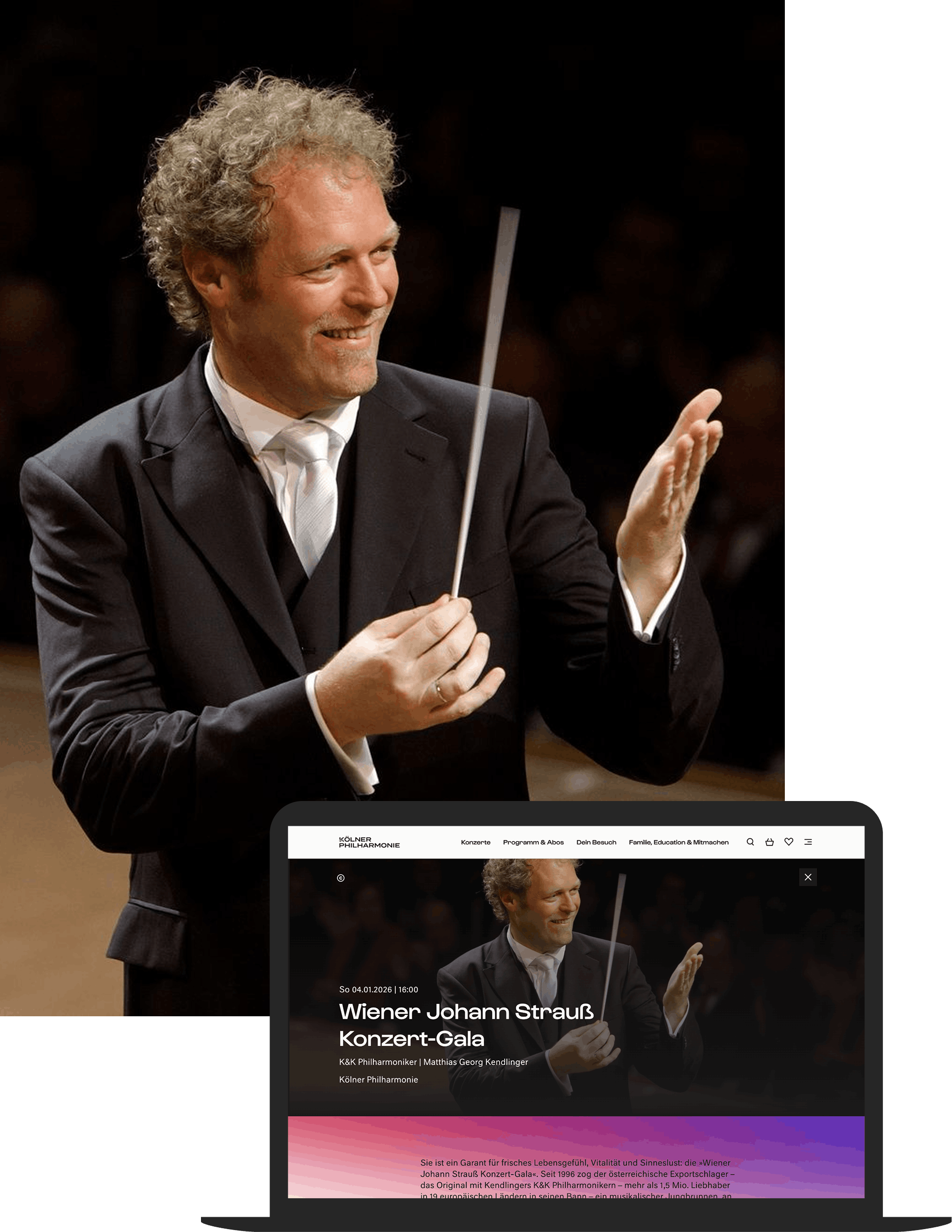
The concert details pages have been expanded with the aim of providing more content without creating distraction or providing an overload of information. The programme, line-up, artist profiles, ticket information and media are clearly structured and arranged so that you can quickly find what you’re looking for.
Digital programme booklets are an integral part of this. They can be viewed on screen and printed as PDFs. Those who wish to prepare in advance are provided with in-depth information. Those who decide on the spur of the moment are not overwhelmed.
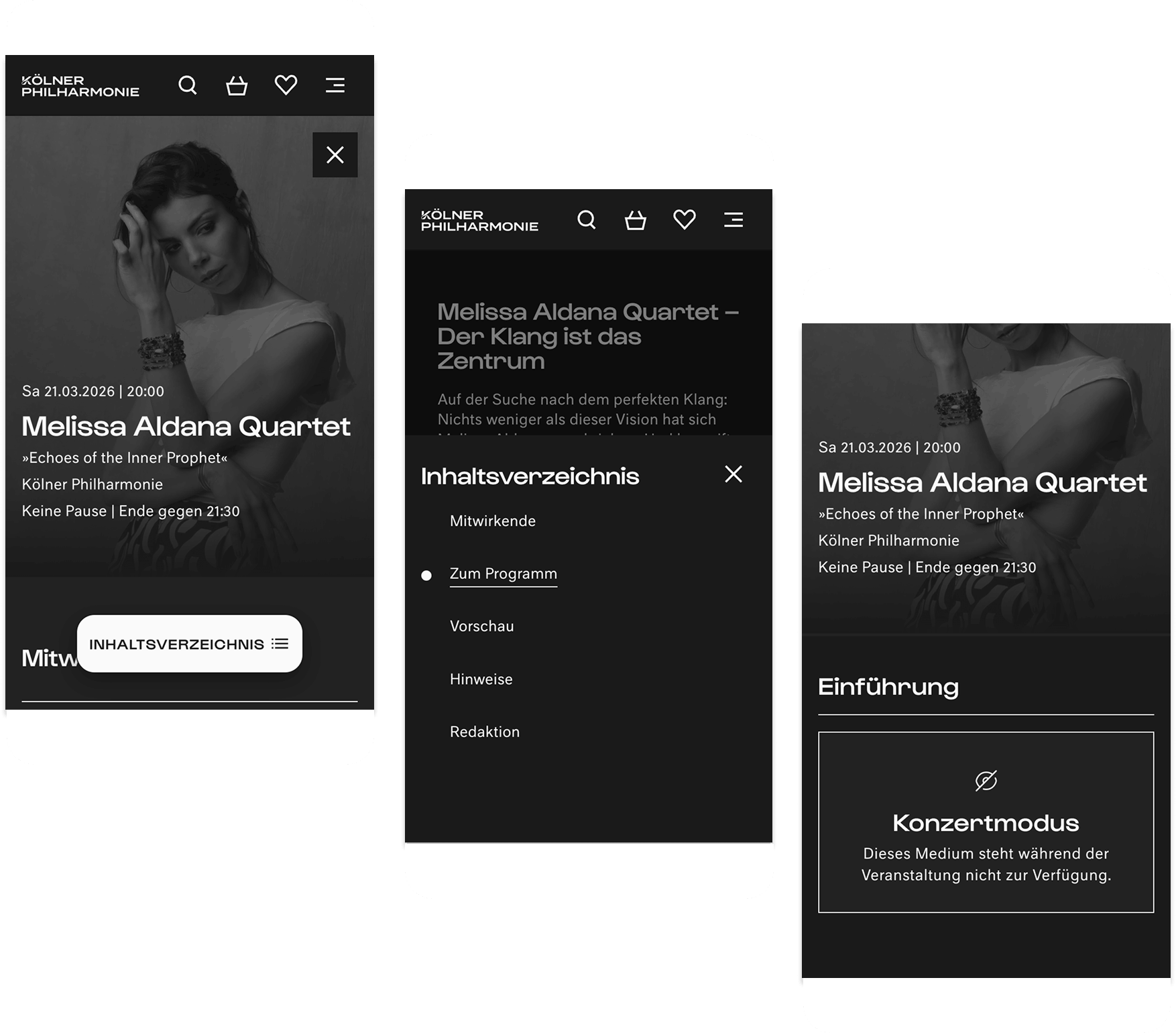
And: the concert experience remains the concert experience. Media content is incorporated, but deliberately limited during the performance. This is to ensure that the auditorium does not become a ‘second-screen’ zone and that audience members are not constantly switching their attention between the stage and their smartphones.
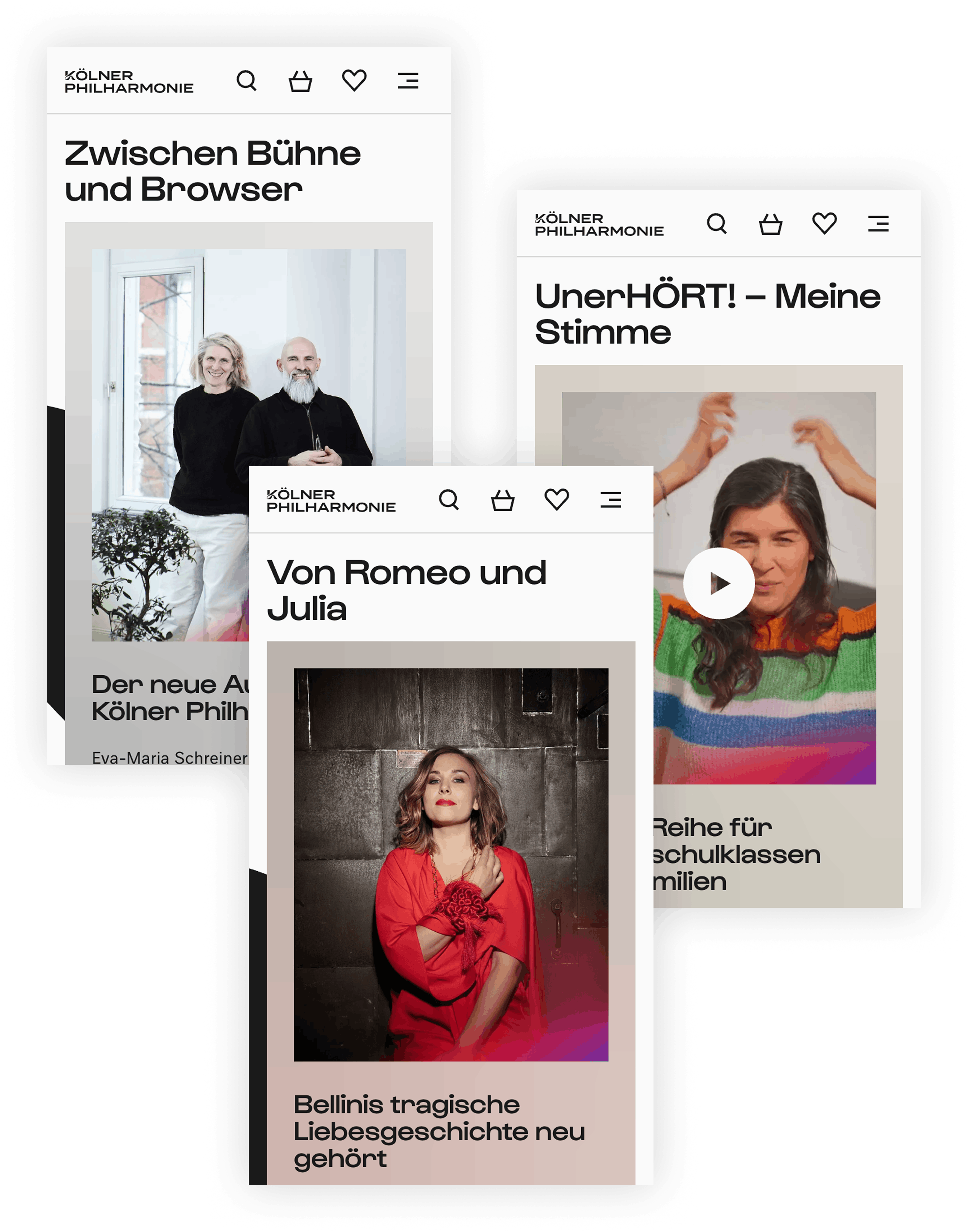
kphil Stories – between the stage and the browser
“Between the stage and the browser” was our guiding principle – and that is precisely how the blog section kphil Stories came into being. Because the Philharmonie is more than just a calendar. It is made up of people, perspectives, backgrounds, voices and atmospheres. And these deserve a space of their own.
kphil Stories is therefore not a news column that disappears after two days. It is an editorial space directly integrated with the programme: articles link to concerts and concerts link to content that provides context. Readers can immediately explore the programme further. Those who come via a concert will find the stories behind it.
This is particularly helpful for the editorial team: Content can be flexibly structured, updated and linked to key themes – without having to logistically piece together new pages every time.
And right there, in kphil Stories, you’ll find an interesting piece in which Eva-Maria Schreiner and Oliver Priester, the managing directors of MIR MEDIA, take us behind the scenes of the relaunch of the Cologne Philharmonic’s website.
Tools for regular customers
For regulars and planning enthusiasts, we’ve added features that really add value to everyday life: a wishlist and advance booking reminders ensure that interesting events don’t get lost in a sea of tabs. This is especially useful when there are a few days between discovering an event and booking it. We’ve also simplified the CTAs to clearly show what the next logical step is.
Summary
Ultimately, the relaunch is not a technical project “in its own right”, but rather a piece of infrastructure for day-to-day concert operations: quick to access on a mobile, stable in the background, and flexible for the editorial team. Micro-animations provide guidance without being intrusive. The event structure brings order to the programme, tags and recommendations open up new avenues, stories add depth – and the programme booklets allow the evening to be followed digitally without disrupting it.
What has been particularly supportive in this process is the close, constructive collaboration with the team at the Cologne Philharmonic under the artistic direction of Ewa Bogusz-Moore. You can tell when a project has been conceived collaboratively – and that is exactly how this relaunch came about.
-
Client
KölnMusik Betriebs- und Servicegesellschaft mbH
-
Project
www.koelner-philharmonie.de
-
Duration
8 months
-
Go-Live
Oktober 2025
-
Team
1 Project Manager
1 Designer
1 Frontend-Developers
1 Backend Developer
1 IT Operator -
Systemwelt
EVIS (Distributionssoftware)
Python/Django (Backend Webframework)
Nuxt (Frontend Webframework)
Elasticsearch (Onsite Search Engine)
Celery (Task-Management)
Sentry (Error Tacking)